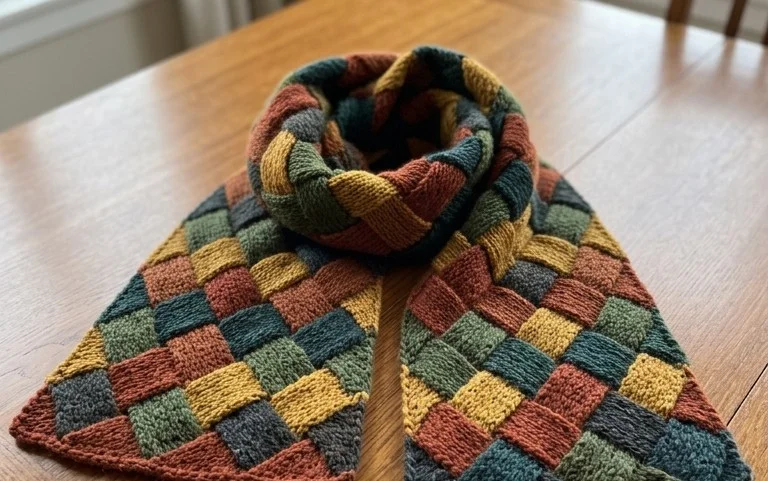
The Entrelac scarf, with its woven, basket-like appearance, is a project that instantly grabs attention. It looks much more complicated than it actually is, making it a fantastic choice for knitters who want to try something new without feeling overwhelmed. This free knitting pattern offers a wonderful opportunity to create a cozy and stylish accessory that feels substantial and looks beautifully crafted. Choosing Your Yarn and Needles For this Entrelac scarf, the yarn choice significantly impacts the final look and feel. You want a yarn that has good stitch definition so the Entrelac pattern really pops. Worsted weight yarn is a popular choice because it’s readily available, knits up at a decent speed, and creates a fabric with a satisfying drape. Acrylic yarns are great for beginners because they are affordable, durable, and easy to care for. If you prefer a more luxurious feel, consider a wool or wool blend. Merino wool, for example, is soft and has a lovely sheen that will make your Entrelac stand out. When it comes to needle size, always check the yarn label for recommendations. For a worsted weight yarn, a US size 7 (4.5 mm) or US size 8 (5.0 mm) knitting needle is usually a good starting point. The exact size might need slight adjustment depending on your personal tension. You want the stitches to be snug enough to hold the Entrelac shape but not so tight that the fabric becomes stiff. Since this pattern is worked flat and will be seamed, you’ll want to achieve a fabric that has some give without being loose. This scarf is perfect for beginners looking to expand their skills, as a thoughtful handmade gift, or even as a pop of texture to brighten up your own wardrobe. Throughout this guide, we’ll walk you through each step of the Entrelac technique so you can create this beautiful scarf with confidence.
Knit Entrelac Scarf: A Textured Treasure
The Entrelac scarf, with its woven, basket-like appearance, is a project that instantly grabs attention. It looks much more complicated than it actually is, making it a fantastic choice for knitters who want to try something new without feeling overwhelmed. This free knitting pattern offers a wonderful opportunity to create a cozy and stylish accessory that feels substantial and looks beautifully crafted.
Choosing Your Yarn and Needles
For this Entrelac scarf, the yarn choice significantly impacts the final look and feel. You want a yarn that has good stitch definition so the Entrelac pattern really pops. Worsted weight yarn is a popular choice because it’s readily available, knits up at a decent speed, and creates a fabric with a satisfying drape. Acrylic yarns are great for beginners because they are affordable, durable, and easy to care for. If you prefer a more luxurious feel, consider a wool or wool blend. Merino wool, for example, is soft and has a lovely sheen that will make your Entrelac stand out.
When it comes to needle size, always check the yarn label for recommendations. For a worsted weight yarn, a US size 7 (4.5 mm) or US size 8 (5.0 mm) knitting needle is usually a good starting point. The exact size might need slight adjustment depending on your personal tension. You want the stitches to be snug enough to hold the Entrelac shape but not so tight that the fabric becomes stiff. Since this pattern is worked flat and will be quite long, circular needles are highly recommended. Even though you are knitting flat, the length of the scarf can exceed the length of straight needles, and circulars make it much easier to manage the fabric without dropping stitches or straining your wrists.
Understanding the Stitch Techniques
The magic of Entrelac lies in how it’s constructed. It’s not a single complicated stitch, but rather a clever combination of basic knitting techniques worked in segments. The core of Entrelac involves knitting “blocks” or “lace” of stitches and then picking up stitches along the sides of these blocks to create the next segment.
- Knit and Purl Stitches: These are the absolute foundation. You’ll be using basic knit and purl stitches to create the individual rectangles within the Entrelac pattern.
- Short Rows: Entrelac uses short rows extensively. This is where you only work a portion of the stitches on a row and then turn your work. There are various methods for handling short rows to avoid holes; common ones include the wrap and turn method or the Japanese short row method. The pattern will guide you on which to use.
- Picking Up Stitches: This is a key technique in Entrelac. You will be inserting your needle into the edge of a knitted section and picking up a specific number of stitches. This creates the seamless connection between the diagonal blocks of your Entrelac pattern.
If you’re new to any of these techniques, it’s a good idea to practice them a bit before diving into the scarf. Look up tutorials online – many knitters find video demonstrations incredibly helpful for visualizing how to pick up stitches or work short rows without holes.
Tips for Beginners
Don’t let the intricate appearance of Entrelac scare you. This project is quite accessible for beginners with a little patience.
- Read the Pattern Carefully: Entrelac patterns often have sections that repeat, but the stitch counts and directions for each segment are precise. Read each section through before you start it.
- Use a Stitch Marker: Place stitch markers between the repeating blocks or at key turning points. This helps keep your place and ensures you’re working the correct number of stitches in each segment.
- Count Your Stitches Regularly: It’s easy to miscount when picking up stitches or working short rows. Make it a habit to count your stitches at the end of each section or at significant turning points.
- Don’t Be Afraid to Frog: “Frogging” is knit-speak for ripping out your work. If you notice a mistake, it’s often best to go back a few rows (or even sections) and fix it rather than trying to mend it later, which can be difficult with Entrelac.
- Start with a Smaller Project: If you’re very new to knitting or Entrelac specifically, you might consider trying a smaller Entrelac washcloth or coaster first. This allows you to get comfortable with the techniques on a smaller scale before committing to a larger scarf.
Customizing Your Scarf
One of the best parts of knitting is the ability to personalize your projects.
- Color: This Entrelac pattern is stunning in a single color, allowing the texture to be the star. However, it also lends itself beautifully to color changes. You can introduce a new color every few blocks for a striped effect. Experiment with contrasting colors for a bold statement or choose shades from a gradient yarn for a softer transition.
- Size: The pattern is usually worked for a specific length and width, but you can easily adjust it. To make the scarf wider, you would simply cast on more stitches and adjust the number of blocks to accommodate this. To make it longer, just continue repeating the pattern sequence until you reach your desired length. Always ensure you have enough yarn for any modifications.
Caring for Your Finished Scarf
Once your Entrelac scarf is complete and you’ve woven in all those ends, you’ll want to keep it looking its best.
- Washing: For acrylic yarns, a gentle machine wash on a cool or warm setting is usually fine. For wool or wool blends, hand washing is recommended. Use a wool wash or a mild detergent. Gently squeeze out excess water; do not wring or twist.
- Drying: Never put a hand-knitted item in the dryer, as it can cause felting and distortion. Lay your scarf flat on a clean towel, away from direct sunlight or heat, to dry. Reshape it as needed while it’s damp.
- Storage: Store your scarf folded rather than hanging it, especially if it’s made from a heavier yarn, to prevent stretching. Keep it in a breathable bag or drawer.
More Project Ideas with Entrelac
While the scarf is a wonderful starting point, the Entrelac technique can be applied to many other projects.
- Blankets or Throws: Imagine a cozy Entrelac blanket in a DK or worsted weight yarn. You would simply work more Entrelac panels and seam them together, or work it as one large piece if your circular needles are long enough.
- Cushion Covers: A small Entrelac panel makes for a textured and stylish cushion cover.
- Bags: Entrelac can create a sturdy and attractive fabric for tote bags or market bags.
- Mittens or Gloves: You can adapt the technique to create the back of hand for mittens or gloves, offering a unique design element.
- Hats: An Entrelac hat can be a real showstopper, though it requires careful shaping for a good fit.
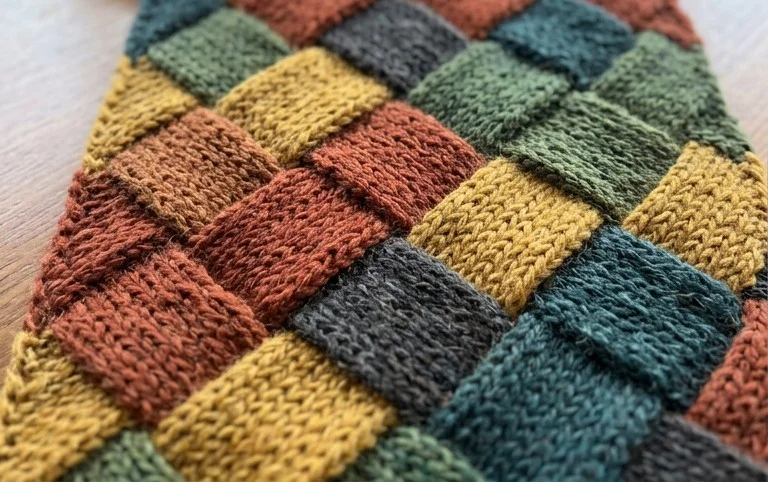
You’ve done it! You’ve created a beautiful Entrelac scarf that looks like it came straight from a high-end boutique. This technique might seem daunting at first, but you’ve proven that with a little patience and this pattern, you can achieve stunning results. Don’t stop here, though! Consider making another scarf in a bold, contrasting color, or perhaps a softer, variegated yarn to see how the Entrelac pattern plays with different shades. Share your finished scarf on social media using #EntrelacScarf and tag us so we can admire your handiwork! We love seeing what you create. Keep exploring our site for more knitting patterns designed to bring joy and texture to your crafting life.